
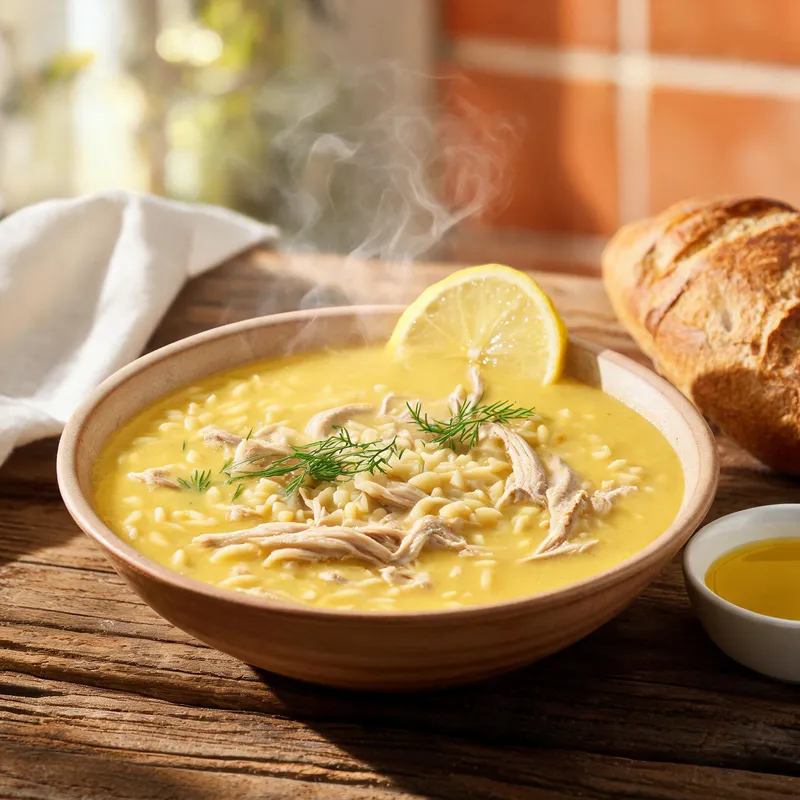
A Bowl of Mediterranean Comfort: Greek Lemon Chicken Soup (Avgolemono)
In Greece, when the weather turns cool or someone feels under the weather, home cooks often prepare a golden, comforting soup. This dish combines the brightness of lemon, the silkiness of eggs, and the richness of chicken. It's Avgolemono, the classic Greek lemon egg soup. The name literally means "egg-lemon" in Greek, simple yet precise. This soup offers a layered flavor experience: a warm chicken broth base, followed by a bright lemon tang, and finished with an egg-based velvety texture. It's a satisfying and nourishing dish that brings the warmth of the Mediterranean into any kitchen.
Why Greek Lemon Chicken Soup Is Worth Making
Many people associate Western soups with either heavy cream bases or thin broths. Avgolemono breaks that mold. It's not as heavy as cream of mushroom soup, nor as thin as plain chicken broth. It falls somewhere in between, offering a unique velvety texture that's light, smooth, and satisfying. What makes it special is that this richness comes not from flour or cream, but from the gentle emulsification of eggs and lemon juice. As a result, it works as both a soup and a light, nutritious meal. It's especially suitable for those with a reduced appetite, picky eaters, or anyone watching their weight. It's low in fat, high in protein, and easy to digest.
Ingredients for Authentic Avgolemono
Making authentic Greek lemon chicken soup doesn't require exotic ingredients, but each component plays an important role. This recipe serves 4 to 6 people.
Core Ingredients
- Chicken legs or whole chicken, 1.5 lbs: Use bone-in, skin-on chicken legs or a small whole chicken. The bones and skin are essential for a flavorful broth. Avoid boneless, skinless chicken breasts, which will result in a thin, bland soup.
- Lemons, 2: Always use fresh lemons. Bottled lemon juice lacks the bright, complex flavor needed for this soup. Yellow lemons are preferred for their aromatic zest and juice.
- Eggs, 2: Use eggs at room temperature. Cold eggs straight from the refrigerator can affect the emulsification process.
- Short-grain rice or orzo pasta, 1/2 cup: Traditional recipes often use short-grain rice, similar to sushi rice or arborio, which releases natural starch to thicken the soup. Orzo, a small rice-shaped pasta, is also common and adds a slightly chewier texture. Short-grain rice is a good choice for a more traditional Greek home-style result.
Aromatics and Seasoning
- Yellow onion, 1: Cut into large chunks. It's used to flavor the broth and removed before serving.
- Carrot, 1: Cut into large chunks. Adds natural sweetness to the broth.
- Celery stalks, 2: Cut into large chunks. Adds depth and helps remove any strong poultry flavors.
- Bay leaves, 2: Provides a subtle herbal note.
- Black peppercorns, 5 to 6: Adds a milder, more aromatic heat than ground pepper.
- Salt, to taste
- Fresh parsley, chopped, for garnish: Optional but recommended.
Step-by-Step Instructions for Perfect Avgolemono
The emulsification process may sound intimidating, but with careful attention to temperature and technique, it's quite straightforward. Follow these steps for a reliable result.
Step 1: Make the Chicken Broth
Place the chicken legs or whole chicken in a large stockpot. Add the onion, carrot, celery, bay leaves, and black peppercorns. Cover with about 8 cups of cold water, ensuring the ingredients are fully submerged. Bring to a boil over high heat, then use a skimmer or spoon to remove any foam that rises to the surface. Skimming is important because the foam consists of impurities and can make the broth cloudy. Reduce the heat to low, cover, and simmer gently for 45 minutes to 1 hour, or until the chicken is cooked through and tender. To check, insert a fork or knife into the thickest part of a leg; it should slide in easily. Remove the chicken from the pot and set it aside to cool slightly. Strain the broth through a fine-mesh sieve into a clean pot or bowl, discarding the vegetables and spices. The resulting broth should be clear and golden.
Step 2: Cook the Rice and Prepare the Chicken
Return the strained broth to the pot and bring it to a boil. Add the short-grain rice or orzo. Reduce the heat to medium and cook for 10 to 12 minutes, or until the rice or pasta is tender but still has a slight bite. Stir occasionally to prevent sticking. While the rice cooks, remove the skin and bones from the cooled chicken and shred the meat into bite-sized pieces. Add the shredded chicken back into the pot with the rice and broth. Stir gently to combine, then remove the pot from the heat. Let the soup cool for 1 to 2 minutes so the temperature drops slightly, to around 160°F to 175°F. The soup should be steaming hot but not boiling.
Step 3: Prepare the Lemon Egg Mixture and Emulsify
This is the most important step. In a medium bowl, whisk the 2 room-temperature eggs until they are frothy and slightly pale. Squeeze the juice from both lemons into the bowl, about 4 to 6 tablespoons, and whisk again until well combined. To prevent the eggs from scrambling when added to the hot soup, it's necessary to temper them. Slowly pour about 1 cup of the hot broth into the egg-lemon mixture while whisking constantly. This gradually raises the temperature of the eggs. Repeat this process once or twice more, adding hot broth in a slow, steady stream while whisking. The mixture should feel warm to the touch. Then, with the soup pot off the heat, slowly pour the tempered egg-lemon mixture back into the pot in a thin stream while stirring the soup continuously. The soup will transform from a clear broth into a creamy, pale yellow color and thicken noticeably. Keep the heat off or very low. Do not let the soup boil again, or the eggs will curdle and the texture will be ruined.
Step 4: Final Seasoning and Serving
Season the soup with salt to taste. Taste and adjust the balance of lemon and broth. It should have a bright, tangy flavor that complements the savory chicken. If it's too tart, a pinch of sugar can help. If it needs more acidity, add a little more fresh lemon juice. Garnish each serving with chopped fresh parsley and a crack of black pepper. Serve the soup hot. Keep in mind that avgolemono thickens as it cools, so it's best enjoyed immediately after preparation.
Nutritional Value and Traditional Wisdom
Avgolemono has long been considered a comforting remedy in Greek households, especially during cold season. Chicken provides protein and zinc, which are important for immune function. Lemons offer vitamin C, which may help reduce inflammation. Eggs contribute high-quality protein and lecithin. The gentle cooking method, which involves slow simmering rather than high-heat frying or heavy processing, helps preserve the natural nutrients of the ingredients. This soup is also gentle on the digestive system, making it a suitable choice for those with sensitive stomachs. Because it doesn't rely on added fats or cream, it's relatively low in calories, with approximately 150 to 200 calories per serving, making it a practical option for those managing their weight.
Tips for the Best Avgolemono
- Temperature control is essential: The soup must not boil once the egg-lemon mixture is added. If the soup accidentally curdles, an immersion blender can help restore some smoothness, though the texture and flavor may be slightly compromised.
- Choosing the right rice: Short-grain rice, such as pearl rice or arborio, is recommended because it releases natural starch that helps thicken the soup. If using long-grain rice, a small amount of cornstarch slurry may be needed to achieve the desired consistency.
- Vegetarian variation: Replace the chicken with mushrooms and zucchini, and use vegetable broth instead of chicken broth. The egg and lemon combination will still create a silky, satisfying texture.
- Storage and reheating: Avgolemono thickens into a semi-solid state when refrigerated. To reheat, warm it gently over low heat, adding a little water or broth to thin it out. Avoid using high heat in the microwave, as this can cause the eggs to separate.
- Optional additions: Some Greek cooks add a small amount of chopped fresh dill to the soup. The herb's slightly anise-like flavor pairs well with lemon. If available, it's worth trying.
A Bowl of Comfort and Tradition
Avgolemono is more than just a soup. It represents the warmth of Mediterranean cooking and the simple, nourishing wisdom passed down through generations. With its bright citrus notes, silky texture, and hearty chicken and rice, it's a dish that brings comfort to any table. Taking the time to prepare this soup at home is a rewarding experience that fills the kitchen with a welcoming aroma and results in a meal that's both satisfying and wholesome.
You Might Also Like
 Digestive Comfort
Lebanese Soup Recipes: 5 Classic Lebanese Soup Recipes for Cozy Nights
Discover 5 authentic Lebanese soup recipes, from red lentil to chicken lemon and…
 Digestive Comfort
Chicken Gumbo Soup: Cozy Fall Recipe for Authentic Louisiana Flavor
Learn to make authentic chicken gumbo soup with this step-by-step guide. Master …
 Digestive Comfort
Gammon and Lentil Soup: A Hearty British Comfort Bowl
Learn how to make a classic British smoky ham and lentil soup. This hearty, prot…
 Light & Refreshing
Red Bean Soup: Simple Recipe for Wellness
Learn how to make traditional red bean soup with natural ingredients. This easy …